
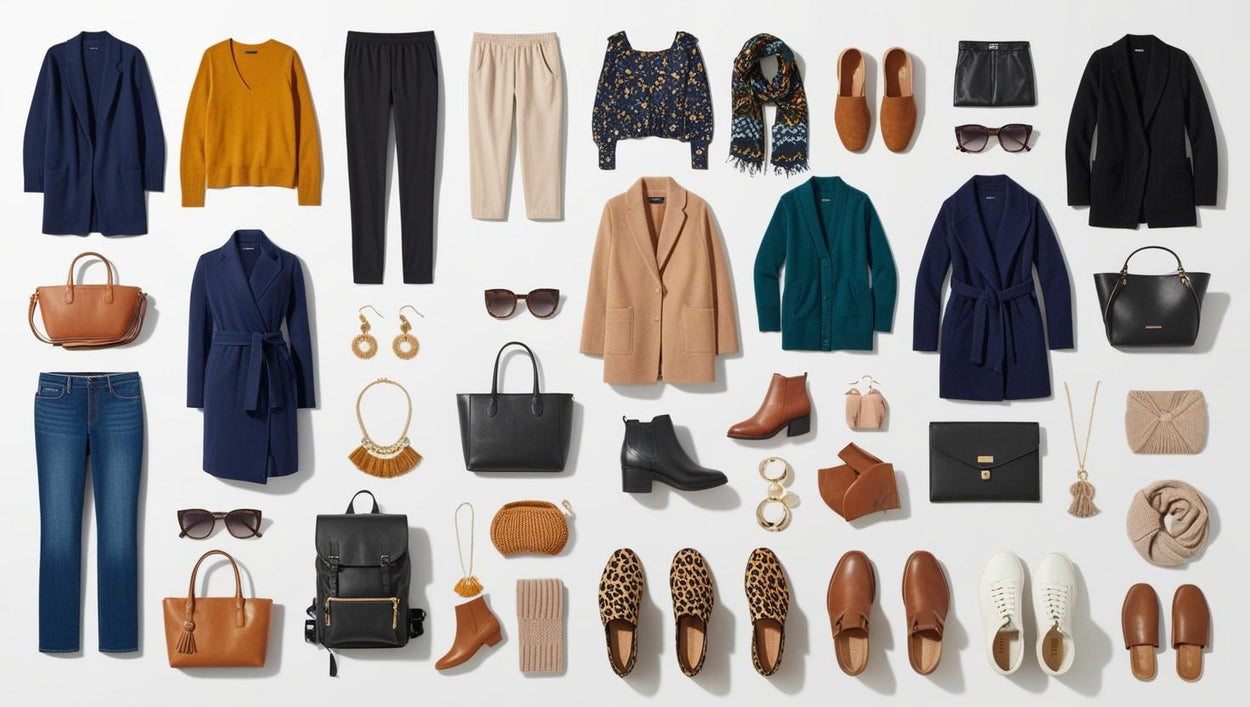
Seasonal Wardrobe Essentials: A UK Guide to Dressing for the Whole Year
Britain has four seasons and often all of them in one week. That is why wardrobe advice written for other climates rarely works here. A guide built around long dry summers and hard cold winters misses the thing that actually defines dressing in the UK, which is variability.
This guide takes the opposite approach. It starts from the layering principle that works in changeable weather, then covers what each season genuinely needs.
The rule that matters more than any single item
Three thin layers beat one thick one. This holds for nearly every day of a British year.
A thick coat gives you two states: too cold or too hot. Three layers give you four combinations you can adjust as the day changes, and British days change a great deal between the school run and the walk home.
The three layers are:
- A base layer against the skin, whose job is moving moisture away rather than adding warmth
- A mid layer that traps warm air, usually knitwear or fleece
- An outer layer that stops wind and rain
Get the base layer right and everything else works better. Get it wrong, usually by wearing cotton, and you end up damp and cold no matter what you put over the top.
Why cotton is the wrong base layer
Cotton absorbs moisture and holds it against your skin. On a cold day that moisture cools and takes your body heat with it, which is why you can feel colder after walking than before.
Merino wool, bamboo and modal all move moisture away instead. That is the entire difference, and it is why thermals and base layers are worth having even if you are not doing anything remotely outdoorsy. A base layer under a work shirt in January does more than a heavier coat.
The same principle applies at your feet. Cotton socks hold sweat, which is why feet get cold in winter and blister on long walks. Merino and bamboo do not.
Spring
The season that catches people out, because the air is cold while the sun is warm. You need to be able to take things off.
Lightweight knitwear is the spring workhorse. Something you can carry when the sun comes out and put back on at four o'clock.
A light waterproof that packs down small. Spring rain arrives without warning and stops just as fast.
Dresses that layer. A dress worn alone in June works in April over a long sleeve top with tights and boots. Look for shapes that take a layer underneath rather than clinging.
Transitional socks. Ankle socks are too little in April and thermals are too much. A midweight bamboo or cotton rich pair sits in between, and women's socks in bamboo handle the temperature swing better than either.
Summer
British summer means preparing for genuine heat and for evenings that drop ten degrees after seven.
Linen and cotton over synthetics. Linen is the most breathable fabric available and the only one that actively moves moisture rather than holding it. It creases, which is what linen does, and it softens with every wash.
Loose over fitted. A garment that skims leaves air between the fabric and your skin. That air is the insulation working in your favour. A fitted top in the same fabric will always feel hotter.
Something for the evening. The single most common British summer mistake is going out at two and coming home at ten with nothing to put on. A light cardigan or overshirt in a bag solves it.
Shorts that are not just for the beach. Linen and cotton shorts in a longer cut work for a pub garden or a town centre in a way denim cut offs do not.
Autumn
The season layering was invented for. Mornings are cold, afternoons are mild, and it rains sideways.
Knitwear in a mid weight. Heavy autumn jumpers are unwearable indoors, and most of autumn is spent indoors. A fine knit under a jacket is more useful than a chunky one on its own.
Proper outerwear. This is where spending money pays off, because a coat is worn every day for four months. Wind resistance matters more than thickness in a British autumn.
Boots. Ankle boots carry you from September to December with jeans, dresses and skirts.
Warmer socks and a hat. You lose noticeable heat through your head and feet, and both are easy to fix. Hats and winter accessories take up no space and change how a coat performs.
Winter
Warmth without bulk, because British winter is wet and mild far more often than it is dry and freezing.
A base layer under everything. The single highest value winter purchase. Thermal or merino under normal clothes means your coat has less work to do.
Wool or wool blend knitwear. Wool insulates even when damp, which acrylic does not. In a climate this wet that difference is the whole point.
Waterproof, not just warm. A padded coat that soaks through is worse than a thinner one that keeps water out.
Thermal socks and gloves. Extremities are where cold is actually felt. Men's socks in merino or thermal weight solve more of a winter problem than most people expect.
Something warm for indoors. Heating costs what it costs. A dressing gown or a proper loungewear set means you can keep the thermostat lower without being cold, which pays for itself over a winter.
The year round pieces
Some things earn their place in every season, and these are where quality is worth paying for because cost per wear is so low.
- Well fitting jeans. Worn more than anything else you own
- A plain white or black top that layers under everything
- A blazer or structured jacket that lifts an outfit without adding much warmth
- Trainers that go with everything
- A neutral bag that works for work and weekends
Where to spend and where not to
The useful question is not what something costs but how many times you will wear it.
Spend on: outerwear, boots, base layers and knitwear. These are worn constantly, they are the difference between comfortable and miserable, and cheap versions fail quickly in specific ways. A coat that is not windproof, boots that leak, thermals that hold moisture.
Save on: trend pieces, occasion wear, anything in a colour you are not certain about, and summer clothing you will wear ten times a year.
Buy at the end of the season for next year. Coats in February and swimwear in September are the two reliable discounts in British retail.
How to check what you actually need
Before buying anything, hang your existing clothes with the hangers facing backwards. Turn a hanger around each time you wear something.
After three months, whatever is still facing backwards is not part of your wardrobe. Most people find that a third of what they own does nothing, and that the gaps are boring and practical rather than exciting. Base layers, plain socks, a coat that actually keeps rain out.
That is usually the more useful shopping list.
A note on fit
Fit matters more than price. A well fitting inexpensive garment reads better than an expensive one that pulls at the shoulder or gapes at the bust.
Two things worth knowing when buying online. Sizes are not consistent between brands, so use the measurements rather than the letter, and check whether a brand uses UK or European sizing. And with knitwear and outerwear, size up if you intend to layer underneath, because a coat that fits perfectly over a t shirt will not close over a jumper.